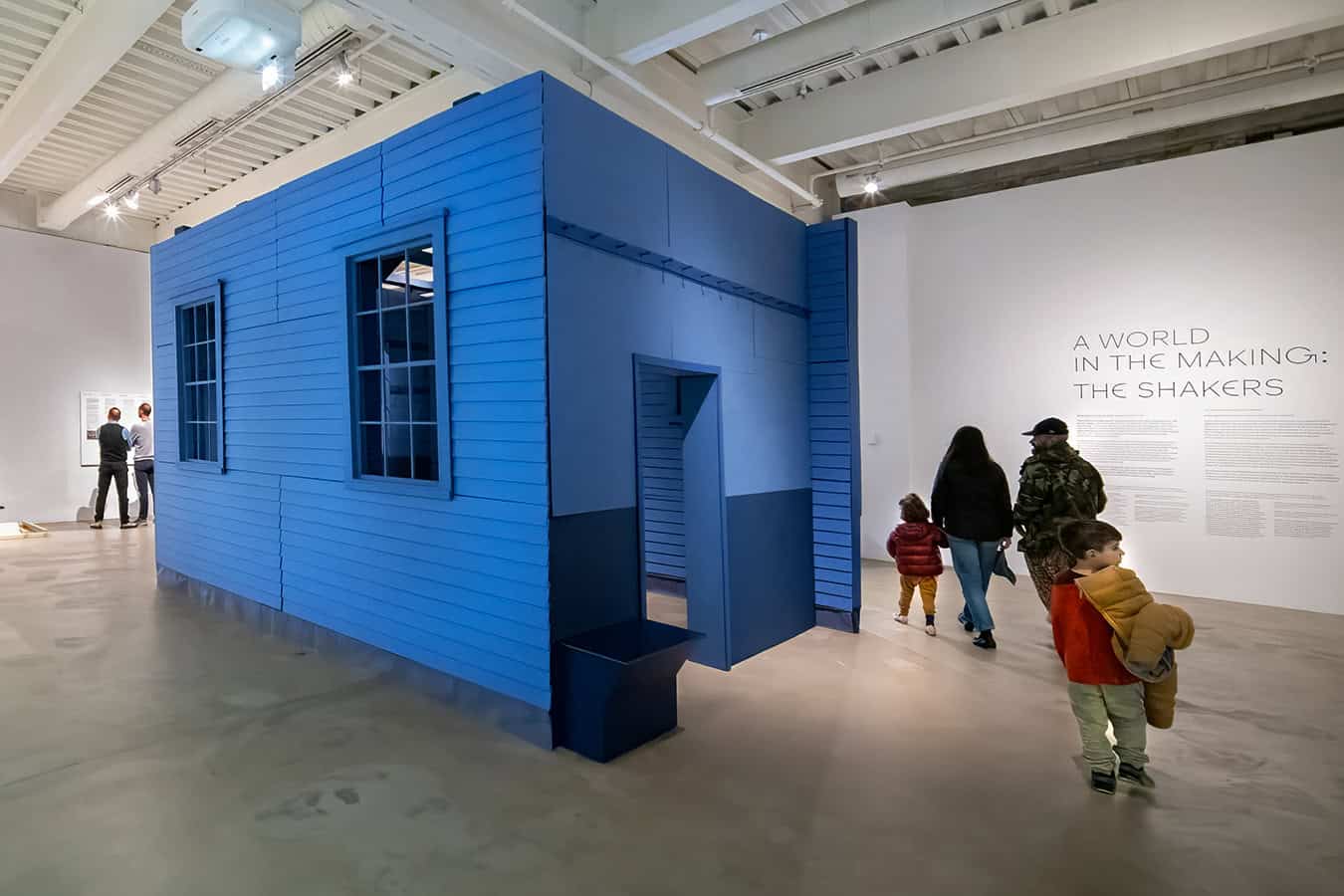
This abstract, brightly colored cardboard artwork of a faux Shaker meetinghouse greets visitors at the exhibit entrance—a somewhat incongruous prelude to the galleries beyond, which celebrate the traditional handcrafted furniture and artifacts for which the Shakers are famed. (Photos: Hoag Levins)
The Shakers were one of America’s most peculiar and extraordinary religious sects. On one hand, they prohibited all sexual activity among their members—including that intended to produce children. On the other hand, they believed that labor and the pursuit of perfection in craftsmanship were forms of worship. That conviction shaped their material culture, producing the objects of striking elegance, simplicity, and functional design for which they are so famed today. The sect, which once had more than 5,000 members across the country now has less than five and is essentially extinct.
This exhibit is at the Institute of Contemporary Art (ICA), a department of the University of Pennsylvania, and continues until August 9, 2026. In keeping with ICA’s usual focus on experimental and under-recognized contemporary art, it opens with an abstract walk-in cardboard shaker meeting house created by Amie Cunat, a faculty member at Fordham University and The Cooper Union in New York. It then expands into the main gallery that is an ode to the 19th century traditions and artistic genius of the Shaker craftspeople.
The exhibit comes out in tandem with the heavily promoted Testament of Ann Lee, a film about the life and times of one of the Shakers’ early leaders. At its height, the Shaker community was an active participant in the Underground Railroad. An all-Black Shaker outpost existed from 1851 to 1900 in Philadelphia led by Rebecca Cox Jackson, a local preacher and seamstress.
Because celebacy was a core pillar of their beliefs, the only way to sustain the Shaker population was through diverse “in-gathering” methods. They took in outside adult converts, orphans, escaped slaves, and children indentured to them by outsider parents hoping to engage the youngsters in the high-quality education, clothing, guaranteed food, and craftsmanship training. Those children worked for the sect until they turned 21 and could elect to stay or leave.
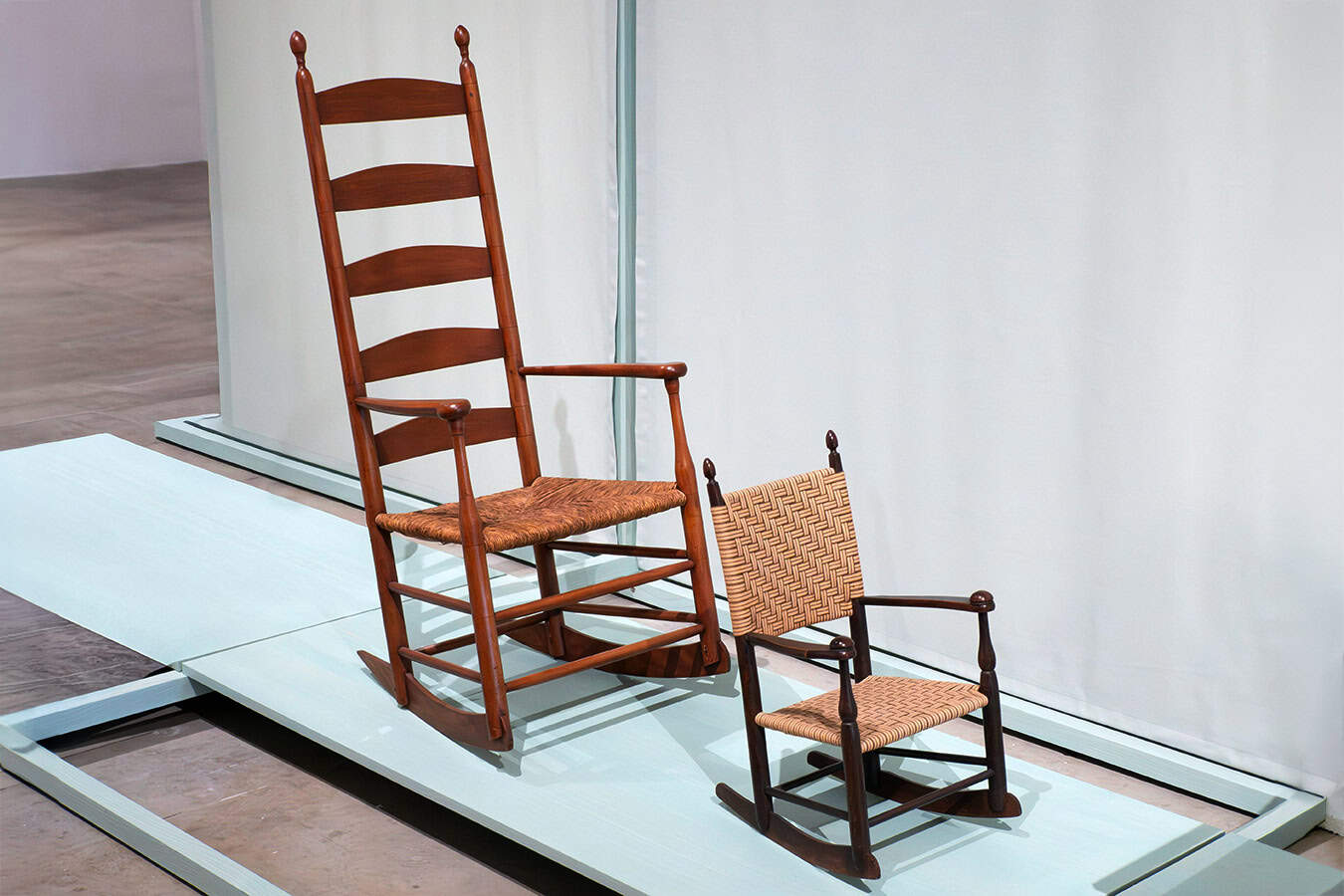
Adult and children’s rocking chairs like these were mass produced by hand in the Shaker proto-assembly-line system that enabled them to scale production without losing quality.
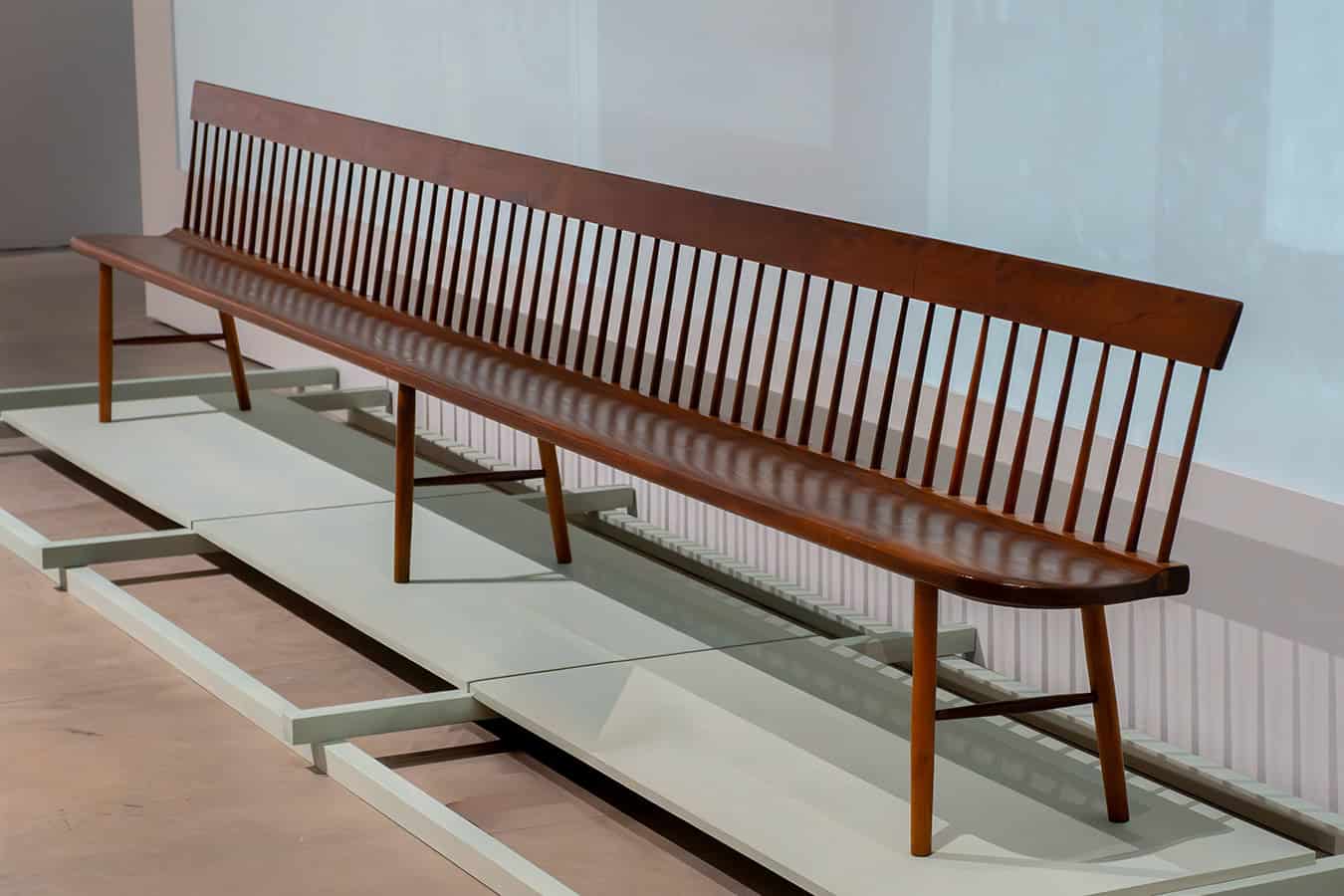
For their meeting houses and dining halls, the Shakers made remarkably long-benches—sometimes exceeding 12 to 20 feet using the same post-and-round construction methods of their iconic chairs
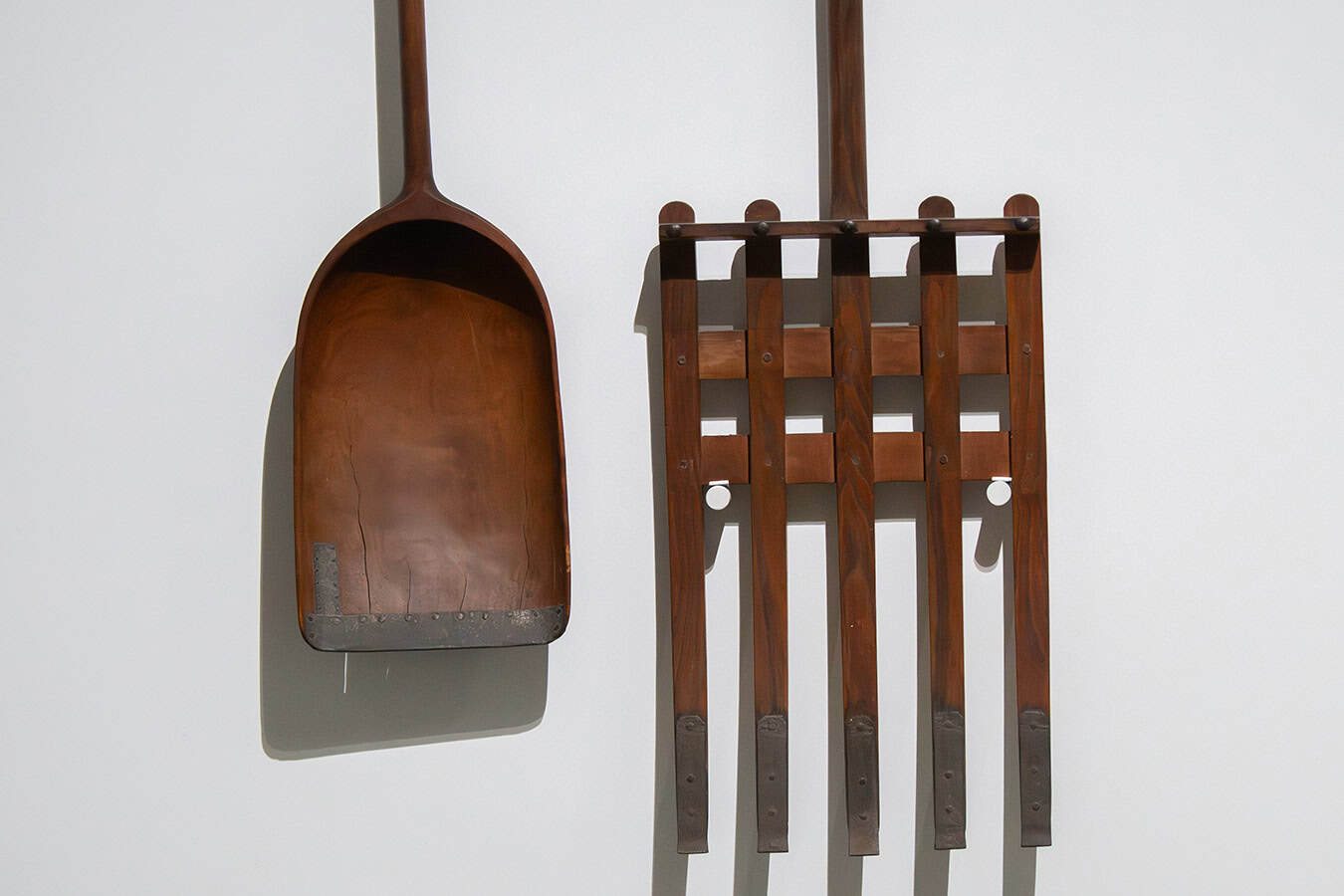
The material culture created by the Shakers assumed that all the physical objects of daily life would be made as part of a devotion to high quality and artistic excellence. Here are a handmade seed shovel and seed gathering rake.
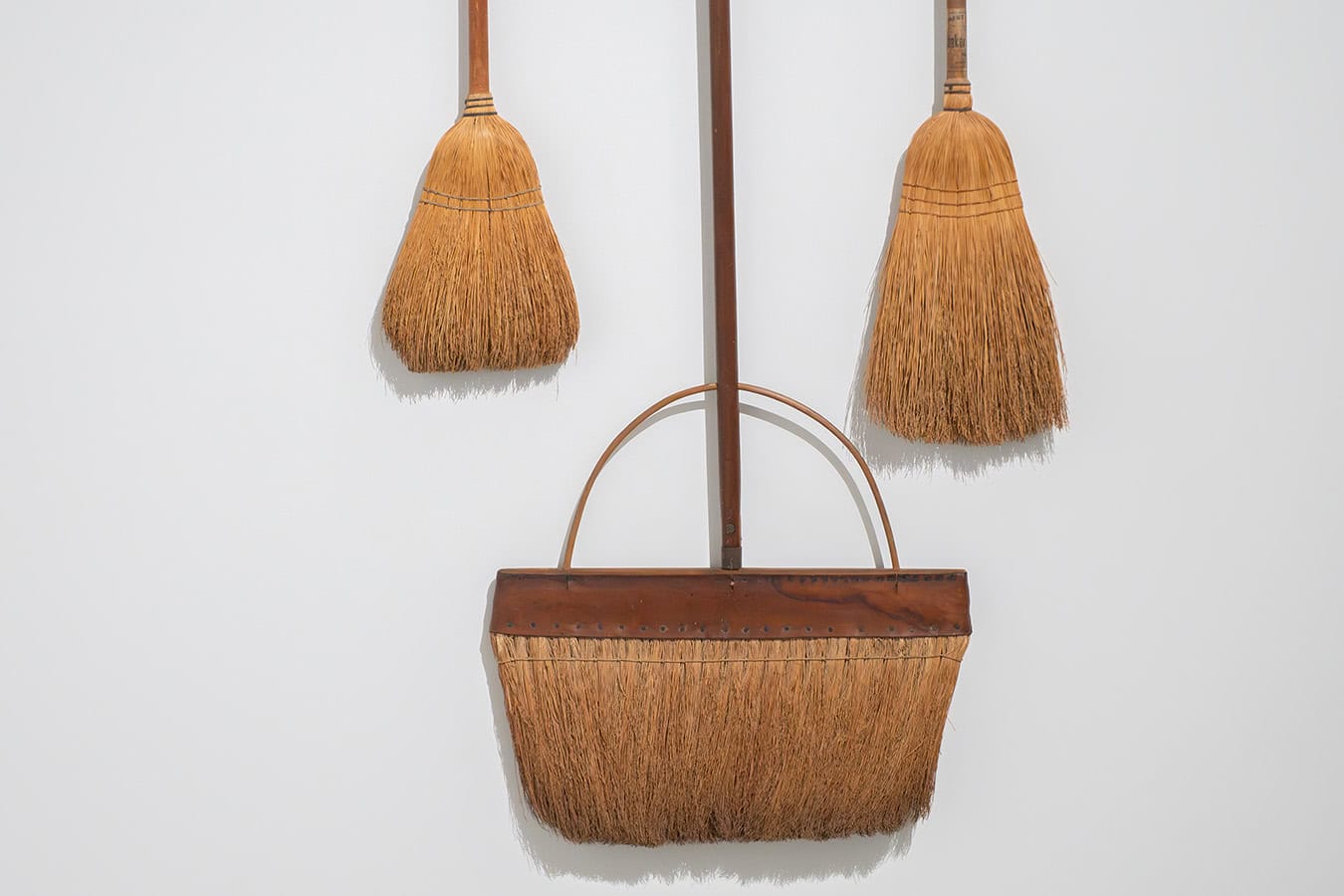
Broom-making in Shaker communities carried both practical and spiritual meaning. The work was seen as a form of communal labor and devotion, and the Shakers are widely credited with developing the flat broom—a design improvement that made sweeping far more effective.
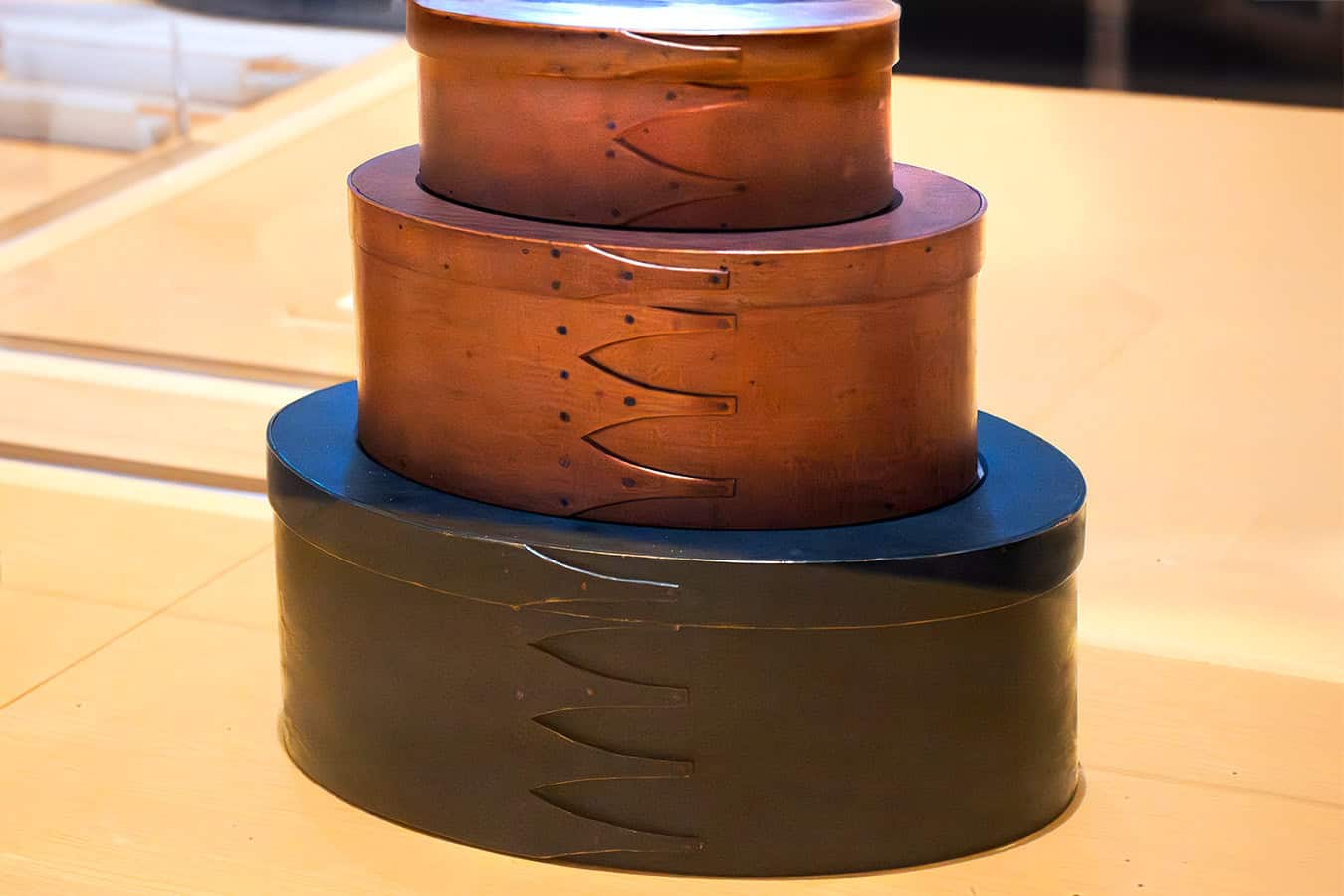
One of the household items iconic of Shaker craft is the oval pantry box, a precision fitted round bentwood contain that is difficult to create.
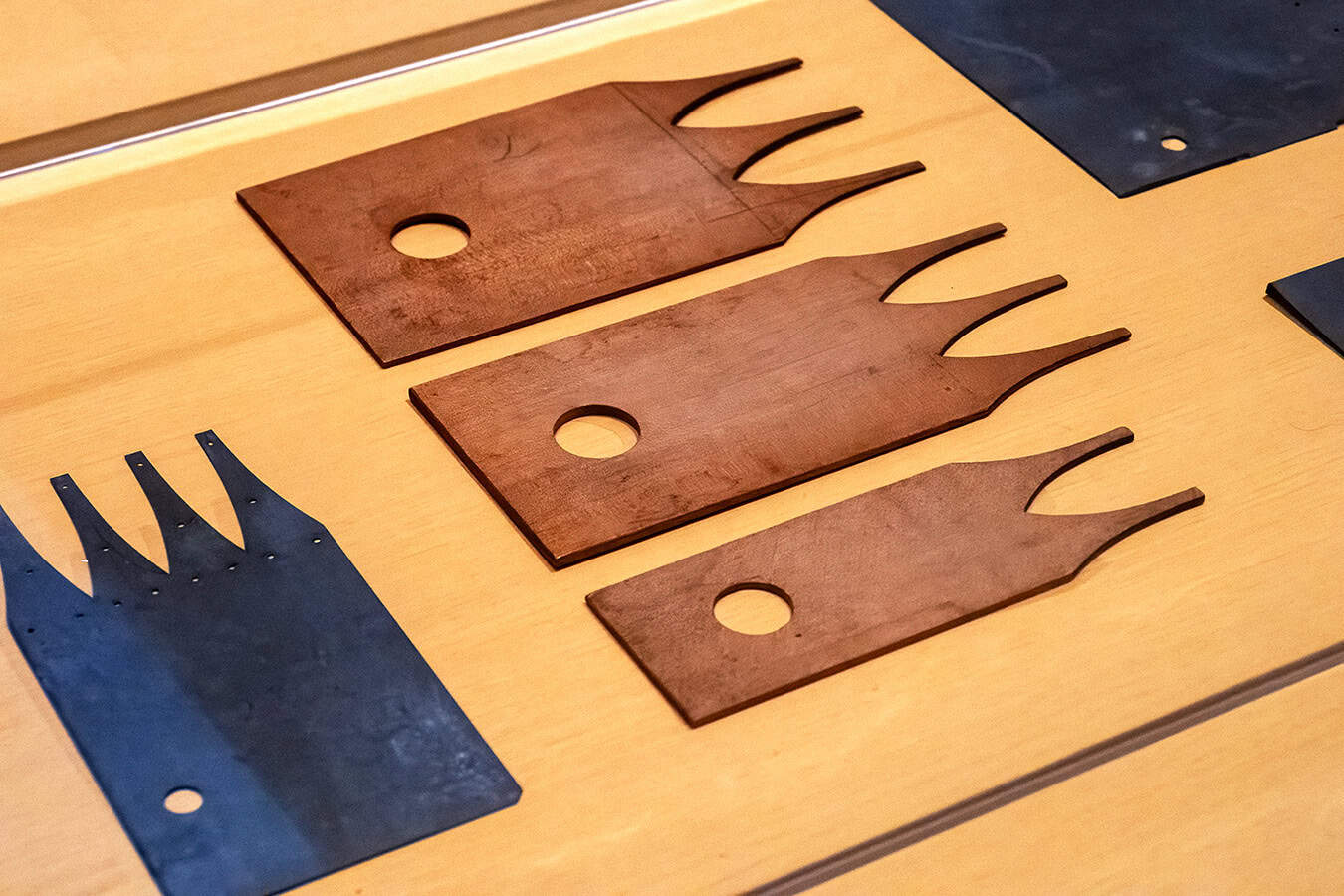
The ICA exhibit not only features samples of the pantry boxes themselves but the precision tools and templates that were used to make them.
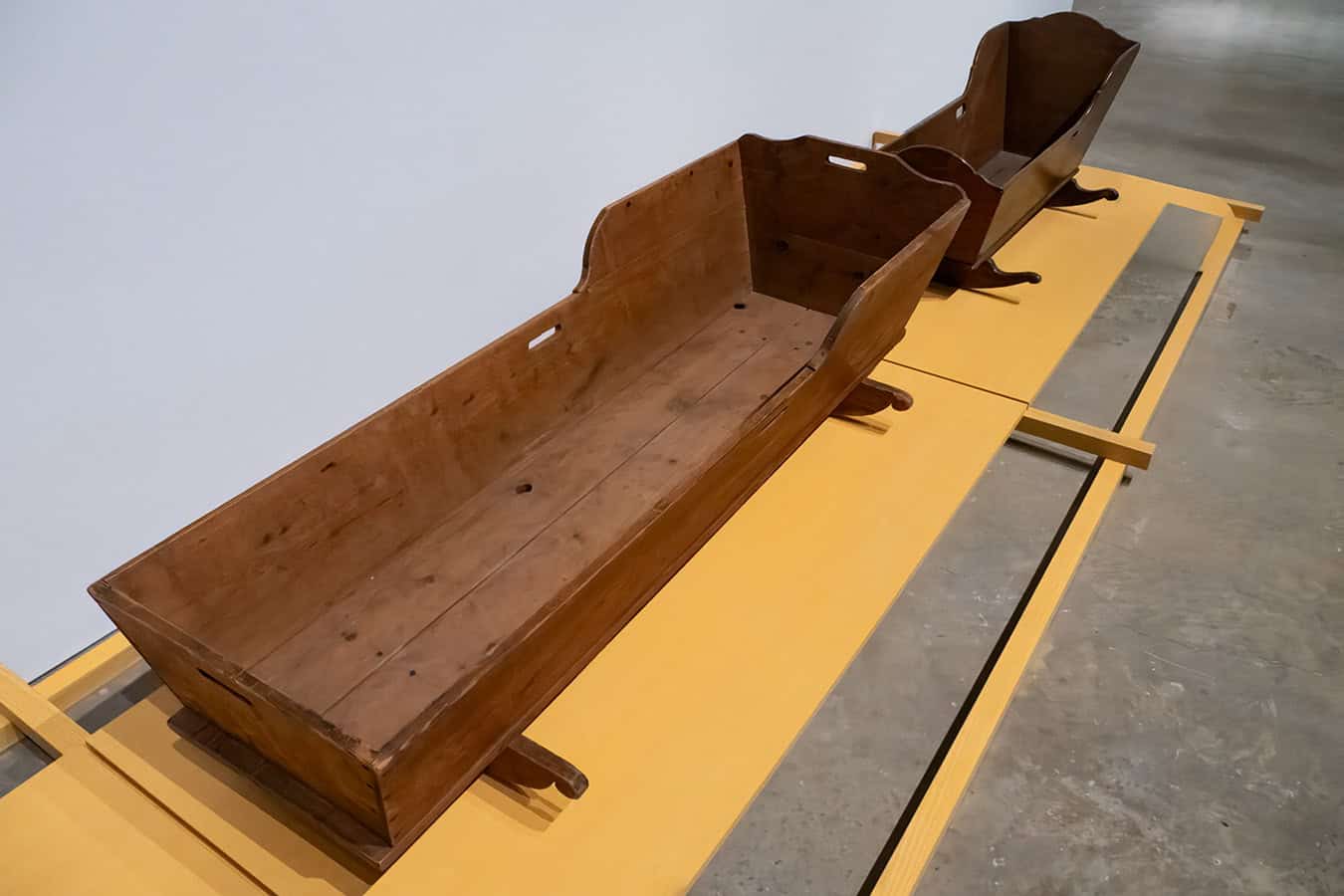
More than just furniture, the adult cradle was a manifestation of Shaker values, underscoring a culture of care that prioritized the needs of the infirm and represented a form of palliative care long before that term existed.
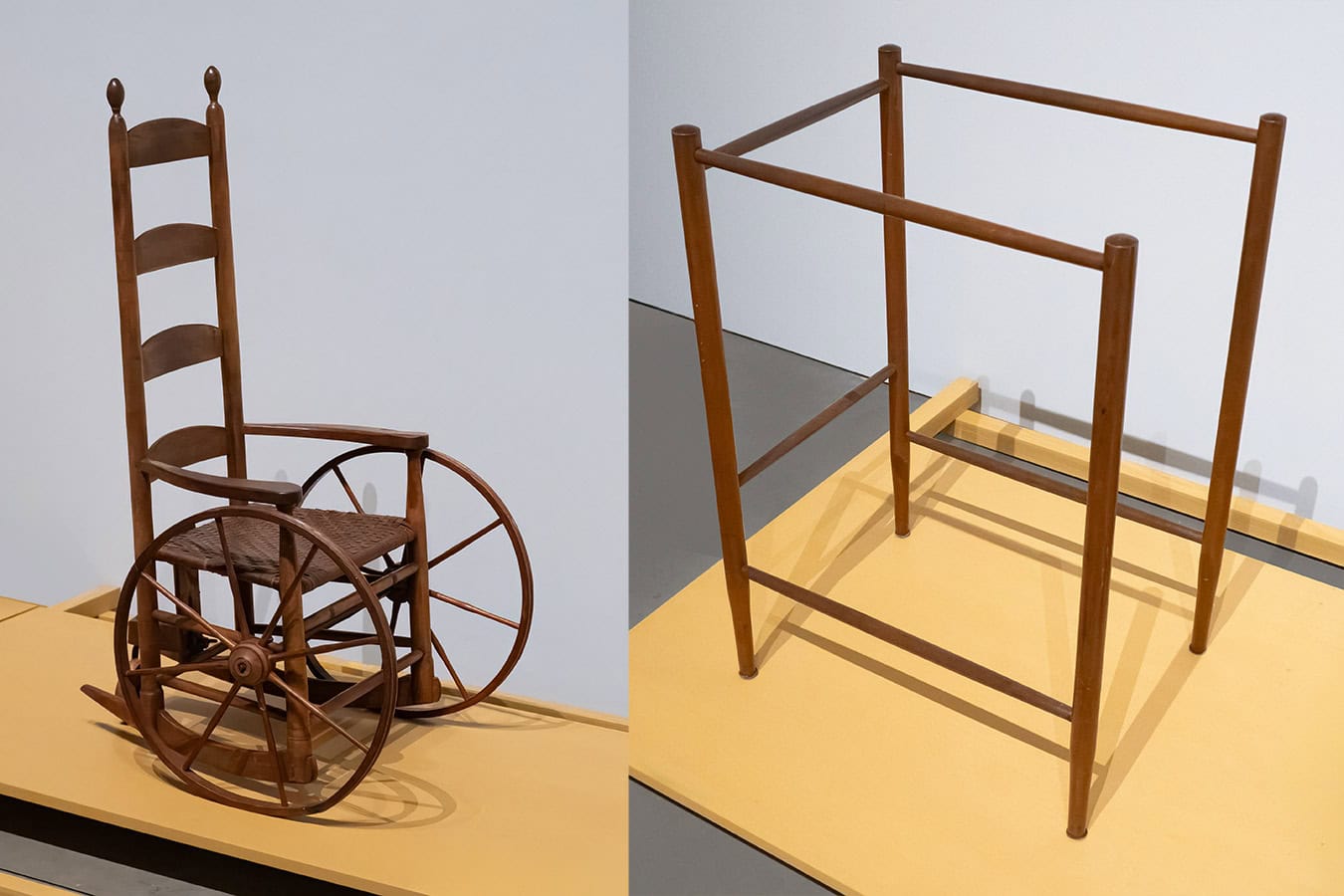
Similarly, handmade wheel chairs and walkers for frail elders were designed and crafted with the same attention to detail and spartan elegance as other Shaker furniture and household objects.
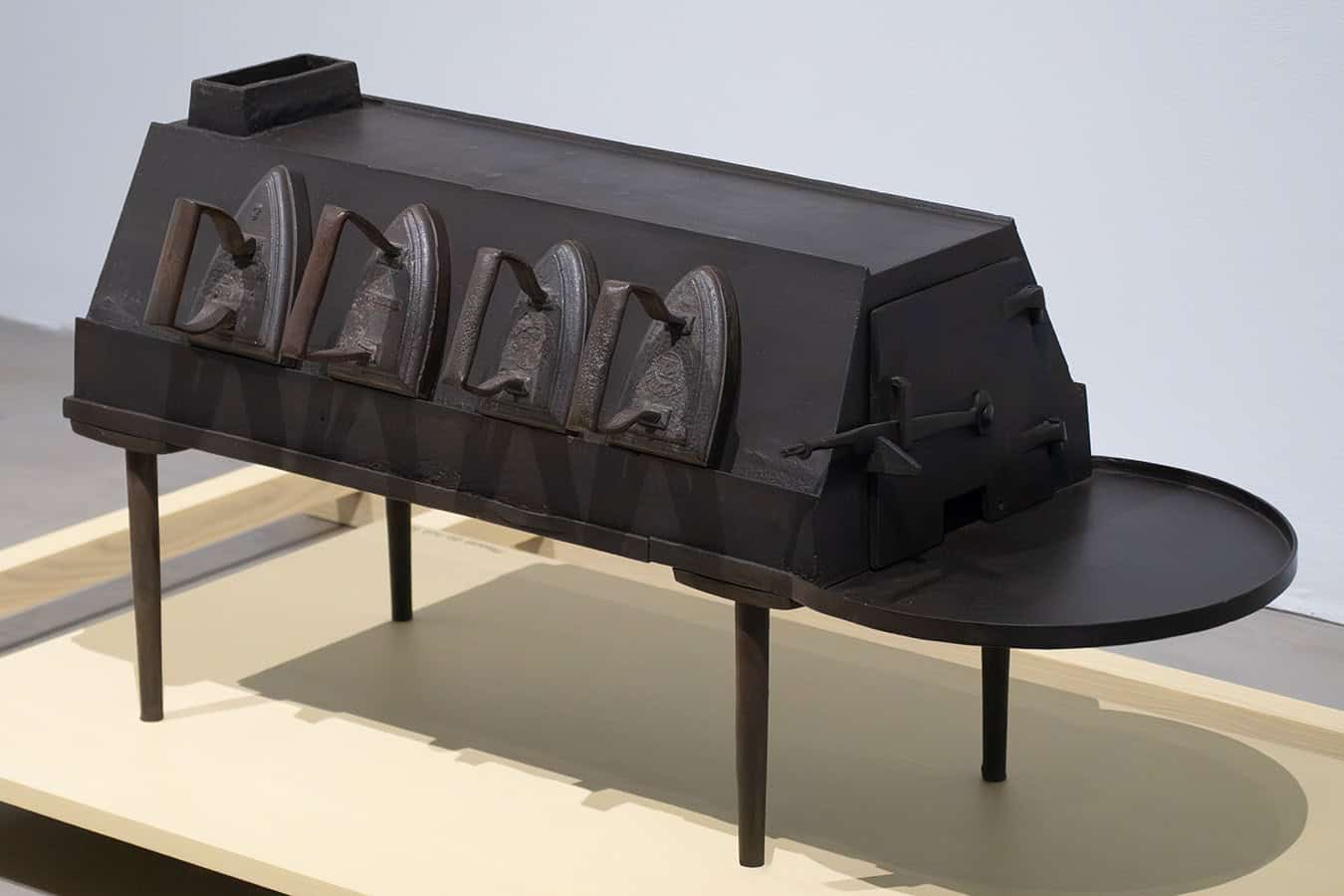
All profits went into the community’s treasury, enabling them to buy more land, livestock, and the most advanced machine tools of their era that they used to produce unique products like “ironing stoves” that heated a large number of flat irons simultaneously.
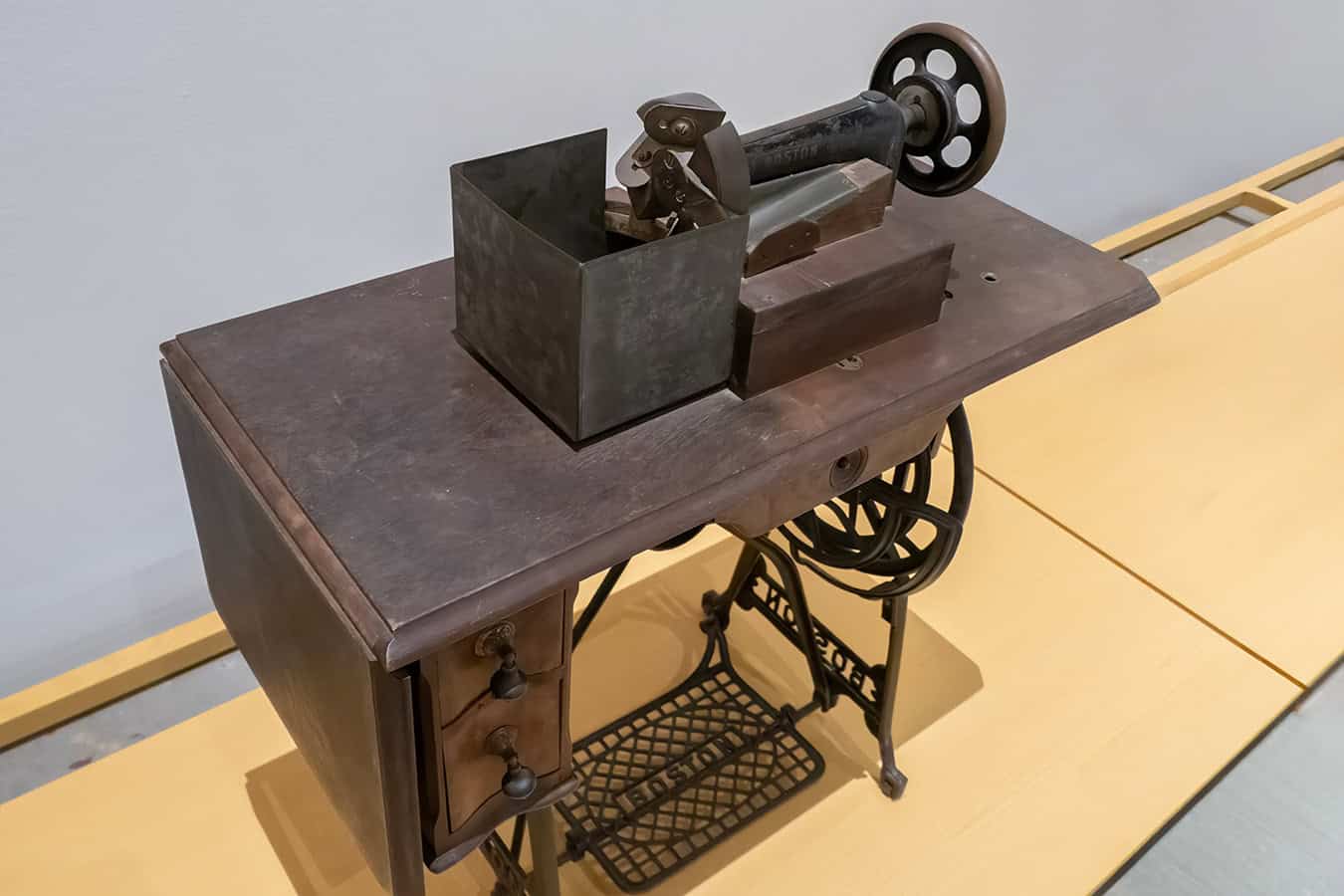
Marketed as both a Shaker candy and a medicinal digestive aid, flag root was made from the fibrous root of the sweet flag plant. Massive amounts had to be sliced thinly before being boiled in thick sugar syrup. The shakers repurposed foot-powered sewing machines as flag root cutters, greatly speeding up the production process.
Shakers were as spritually focused as they commercially shrewd. They didn’t just make and sell furniture, they transformed their villages into diversified industrial hubs that set the standard for the consumer goods of their time.
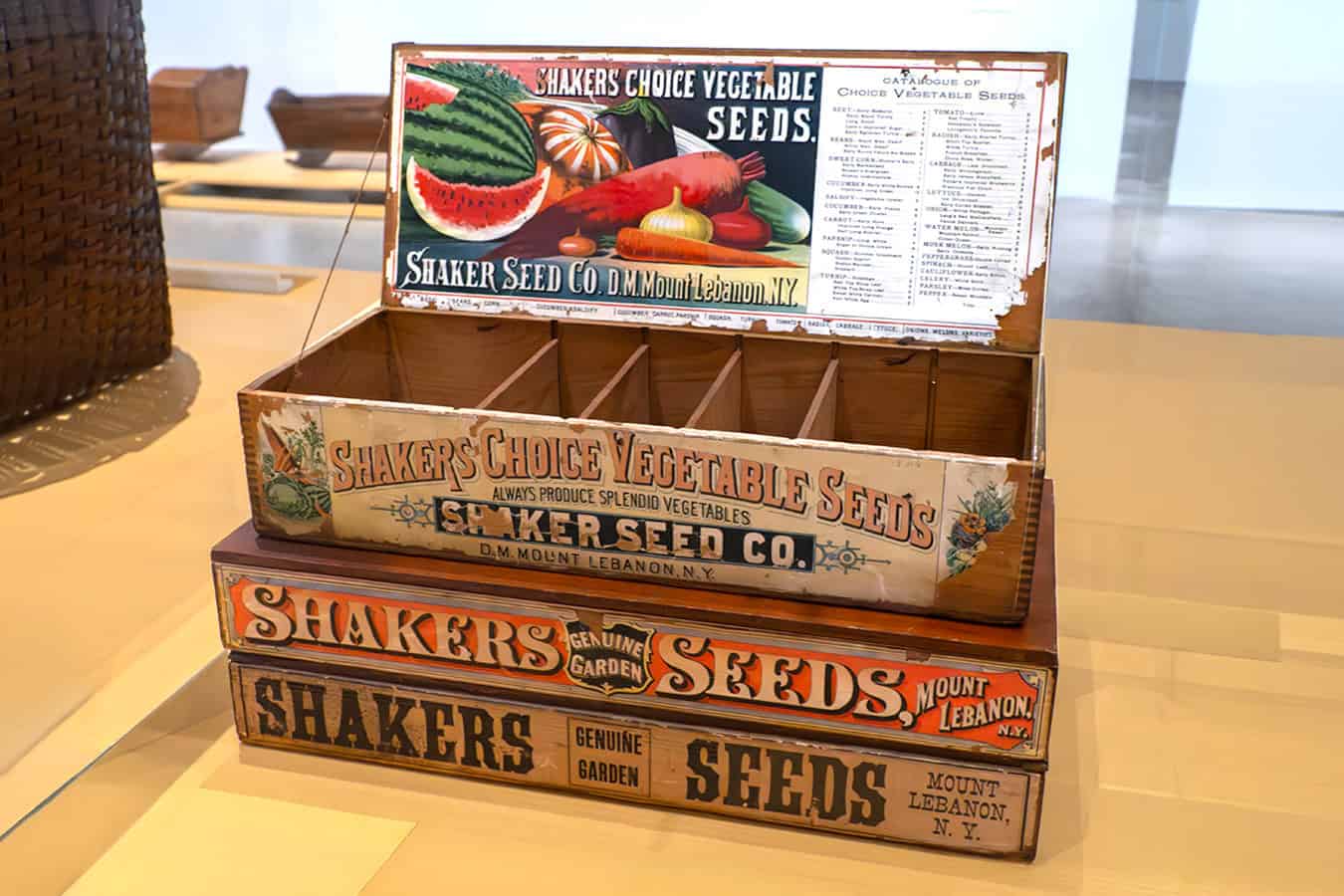
Disrupting the 19th-century market for seeds then typically sold in large sacks or jars, the Shakers were the first to nationally sell seeds in paper packets. The product became wildly popular among consumers who had not previously been able to buy small quantities of seeds for kitchen gardens.
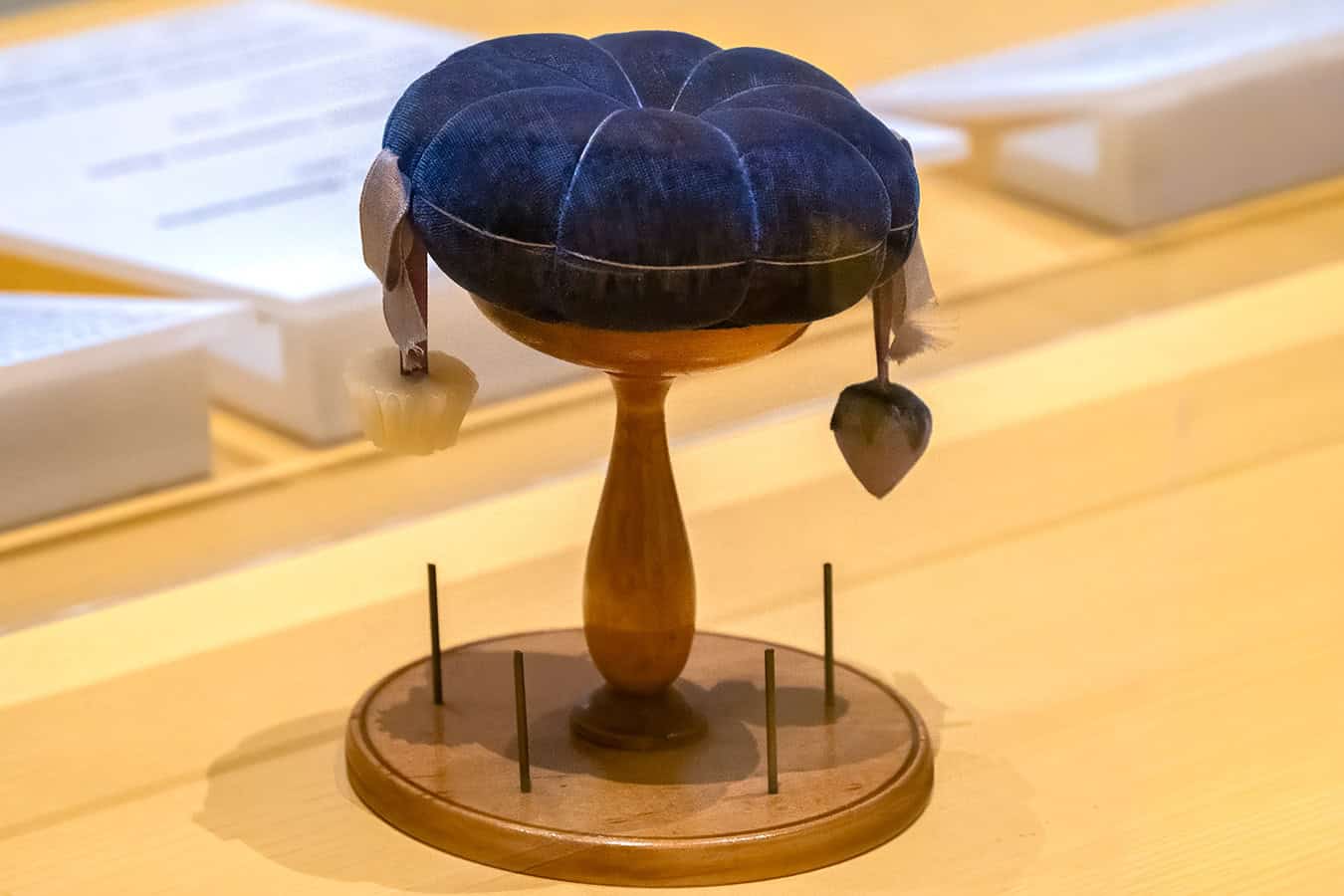
Shaker craftsmen also produced finely made accessories for women engaged in sewing and other needlework. Each element had a practical function, reflecting the Shaker commitment to usefulness and thoughtful design. This velvet-and leather-covered pincushion, intended to be mounted on a table, is a particularly elegant example of that approach.
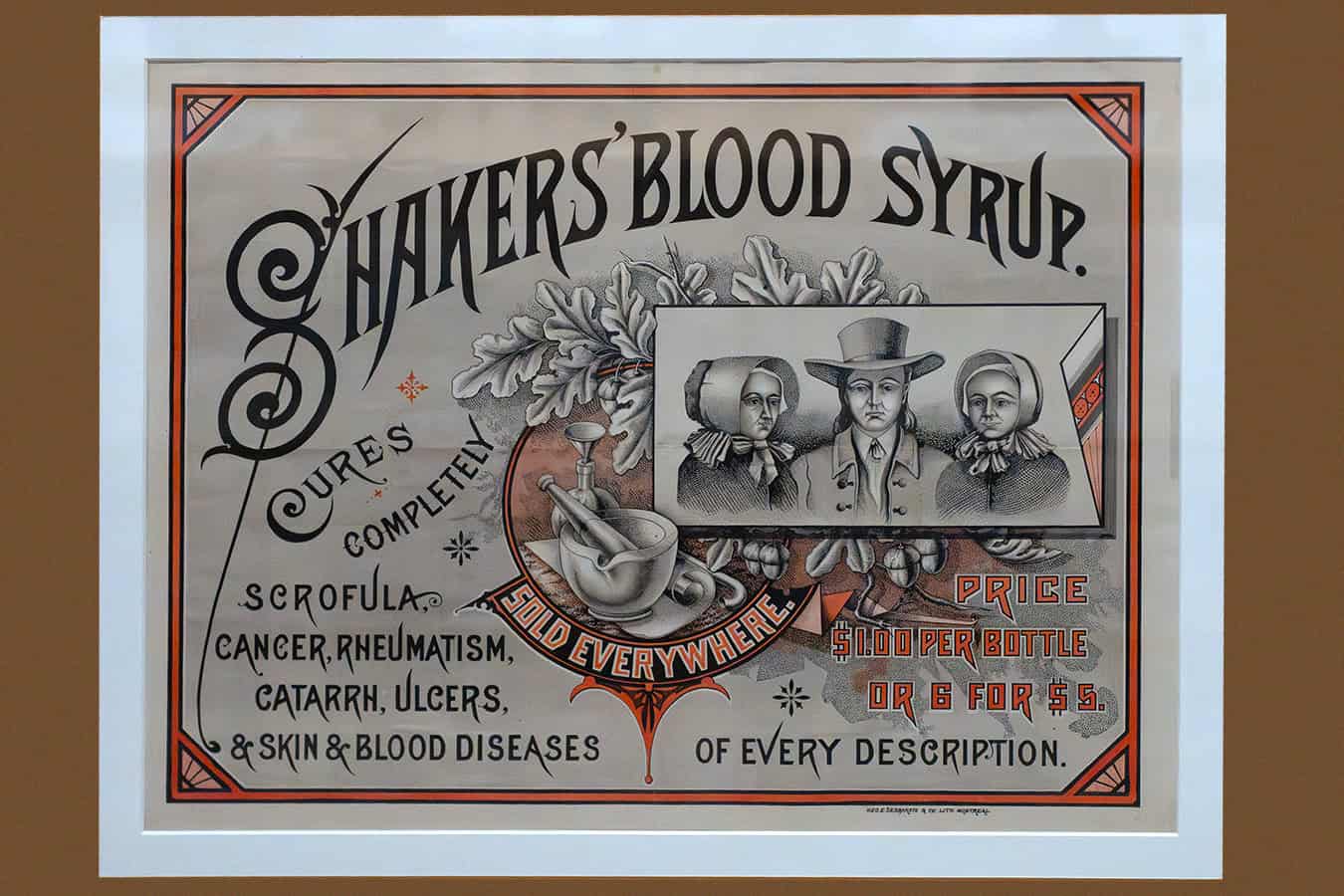
The Shakers were pioneers in the medicinal herb industry, and blood-focused remedies were some of their most successful exports. In the 19th century, many health issues were believed to be caused by toxins in the blood. Blood sryups were sold as cures for this.
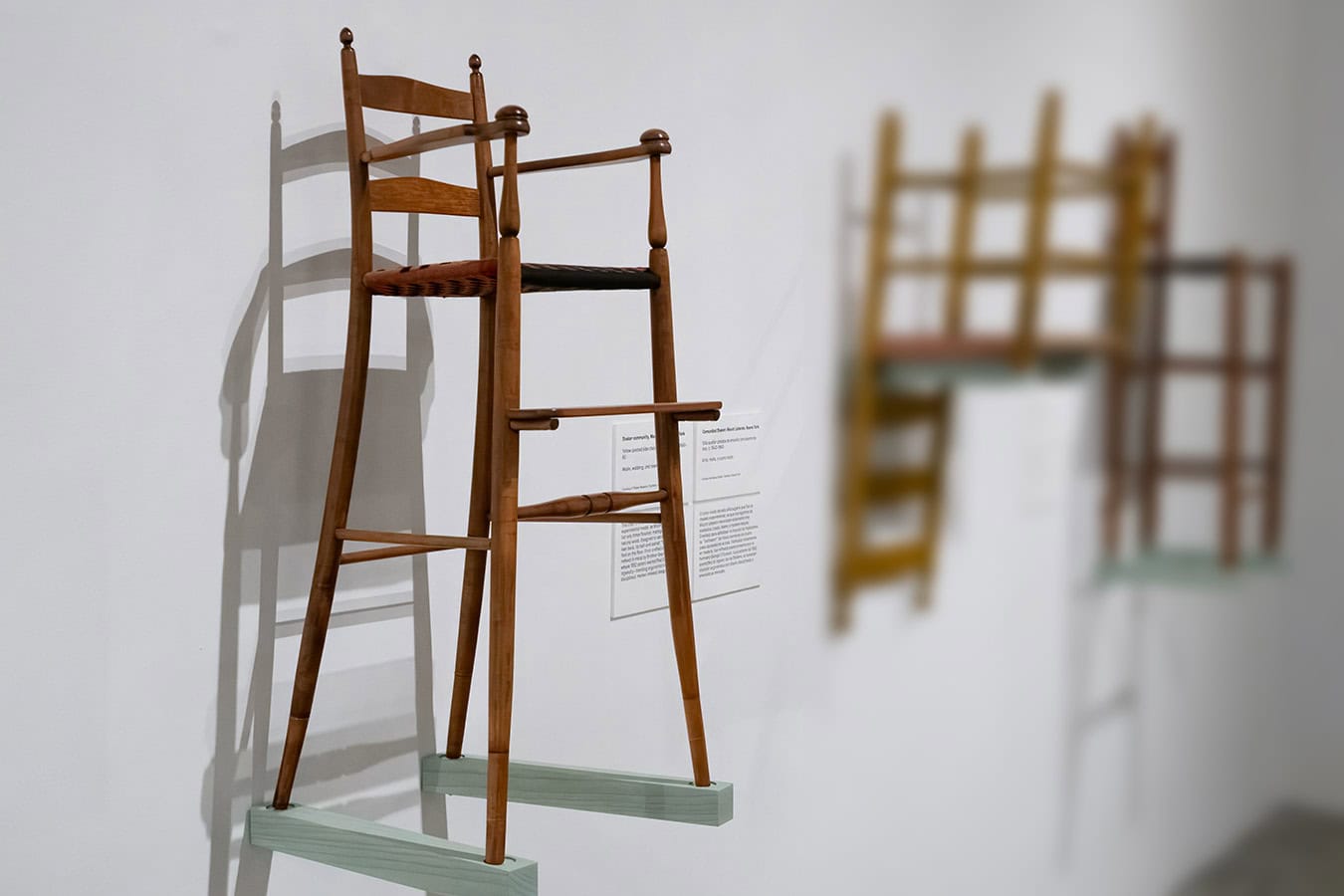
As with their other chairs, even children’s highchairs were products of high design and extraordinary craftsmanship.
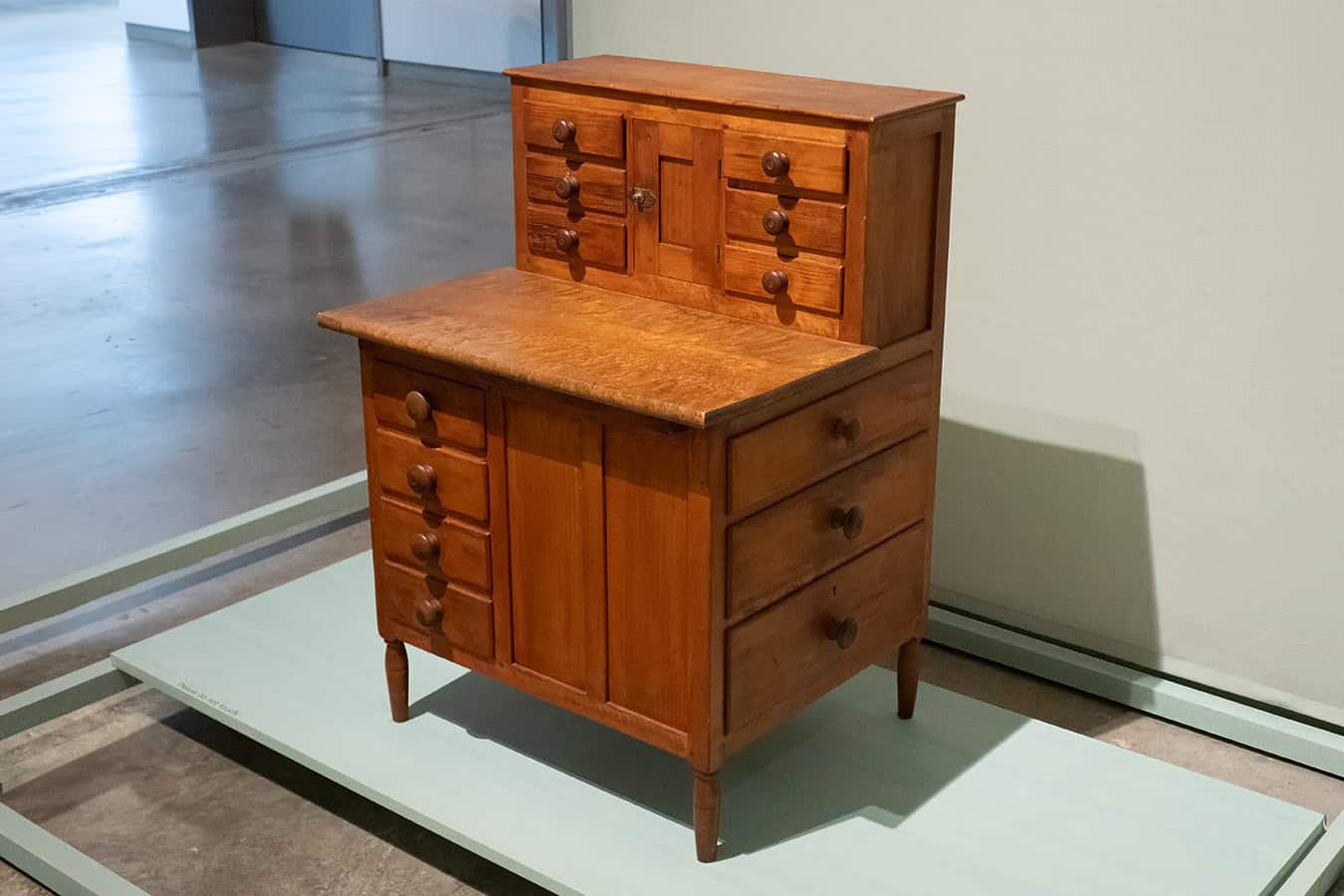
Shaker seamstresses had to make, maintain, and repair enormous amounts of clothing for their community. That gave rise to the creation of “sewing desks” at which two women could work with all the needlework tools and supplies needed in the drawers and compartments.